Welcome to Our Home Schoolers Website

M is a 6 yr old girl who loves animals and stories
R is a 4 yr old girl who loves rainbows and dancing

K is a 2 yr old girl who loves to laugh

Explore activities and reviews for many resources available for home schoolers, unschoolers, or anyone who wants to supplement their child's education. With the information that you can find in this site, you will gain the tools you need to ...

· Exercise Your Children's Creativity
· Teach Them to Love to Learn
· Generate Understanding
· Build Knowledge
· Develop Strong Characters

Wednesday, April 30, 2008

Math Skills: Ordering


We have just started a new math skill: ordering. I always like using stories to teach math concepts. There is something that triggers understanding when you can see it in a book. Maybe they word it better than I can. Maybe it is the pictures. Or maybe it's because stories always make an impact on children.

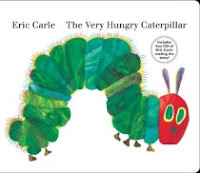
So I planned a few art projects, some games, and ordered some really good books, including The Best Bug Parade and The Very Hungry Caterpillar.


Full list of books that I used:

The Best Bug Parade by Stuart J. Murphy


Who Sank the Boat? by Pamela Allen

How Big Is a Foot? by Rolf Myller

One Was Johnny by Maurice Sendak

Mighty Maddie by Stuart J. Murphy


Full list of games:

Game #1:
You will need toys of various sizes. We used stuffed animals. Children put them in order from tallest to shortest, and then shortest to tallest. Key words: short, shorter, shortest, tall, taller, tallest.

Game #2:
You will need building blocks (lego's, mega blocks, or wooden stacking blocks will do). Build a series of towers where each tower is taller or shorter than the next one. R likes to build stairs, so this would work too. Key words: short, shorter, shortest, tall, taller, tallest.

Game #3:
You will need stairs to climb. With each step up, talk about how much higher you are, and at the top, you are the highest. With each step down, talk about how much lower you are, and at the bottom, you are the lowest. Key words: high, higher, highest, low, lower, lowest.

Game #4:
You will need various items from your pantry. I used a jar of peanut butter, a can of peanuts, a container of hot chocolate mix, an empty mug, and a coffee tin. I picked items that were both heavy and light and where the size had no bearing on the weight. I had the girls order them by weight (estimating the weight by picking it up). Key words: heavy, heavier, heaviest, light, lighter, lightest.

Game #5:
You will need 6 Mason jars (or other glass jars that are all the same size), water, and a metal spoon. Set up tone bottles with various amounts of water and then listen to the pitch of each jar by tapping it with a metal spoon. Make note that the lower the pitch the higher the water level. Key words: high, higher, highest, low, lower, lowest.

Game #6:
Play with stacking cups, stacking rings, and Russian nesting dolls.


Full list of art projects:

Art Project #1:
You will need glue, string, and construction paper. I cut the string by inches (i.e. 1 inch, 2 inches, 3 inches, etc.) until I had 8 strings for each girl. The girls put them in order by length and then used a ruler to measure them. I had them write the number of inches by each string and then glue the string onto the paper. Key words: short, shorter, shortest, long, longer, longest.

Art Project #2:
You will need markers, construction paper, and varying sizes of round lids. Centering a lid on the middle of the page, trace it with a marker. Continue to do this for all lids so that the smallest circle is in the center of the largest circle. The child should be able to see the growing sizes of circles. Key words: small, smaller, smallest, big, bigger, biggest, large, larger, largest.

Art Project #3:
You will need varying sizes of shapes drawn on a paper, scissors, glue, and construction paper. Cut out the shapes and glue them in order by size on the construction paper. Key words: small, smaller, smallest, big, bigger, biggest, large, larger, largest.

Art Project #4:
You will need construction paper, scissors, glue, and cutouts of varying shapes. I recommend that the cutouts have a different number available for each shape (i.e. 1 circle, 2 squares, 3 hearts, etc.) Draw a butterfly on a piece of construction paper. Have the children cut out the butterfly and then glue shapes on their wings. When finished, compare the number of shapes on each butterfly. Key words: more, most, less, least.

Art Project #5:
You will need multiple toys of multiple types (i.e. 5 balls, 3 cars, 6 dolls, and 7 stuffed animals). Make a graph where you have a row for each type of toy and fill in a box for each number of that toy. Compare the lines, determining which row has the most and which row has the least. Key words: more, most, less, least.

Monday, April 28, 2008

Teaching Safety Rules: Stranger Awareness

One day two years ago, M put a plastic bag over her head, thinking it was funny. I reacted poorly, panicking, yelling. She had no clue what she had done wrong, and being hurt by my reaction, she did not listen to my explanations. Thus I learned that I need to talk to my children about safety issues BEFORE it becomes an issue.

Talk about Safety
My lesson for them have been two-fold: (1) you are important and (2) your safety is important. So I would talk about WHY we wear seatbelts, WHY we don't play with matches, WHY we don't put plastic bags or pillows over our heads, WHY we don't run into the road, and WHY we wear helmets when we ride bikes. The idea is that when they are older, they will choose to be safe because they believe they are important and that their safety is important.

Now fast forward to the present, and my girls are asking to play in the front yard. Last year, I let them play in the front yard with supervision (i.e. I weeded and planted my flower beds while they rode their bikes). I told them where their boundaries are, and I watched them listen to the rules.

1) They stayed out of the street.
2) They did not go past the light post to the right or the street corner on the left.
3) They kept their helmets on while they road their bikes.
4) They yelled at the other kids for riding bikes in the road and not wearing helmets.

I learned that I can trust them. They have proven that they are safety conscious and are willing to listen to the rules. That kind of responsible behavior should be rewarded with trust and expansion of boundaries.

Build Autonomy One Small Step at a Time
I read this article from Free Range Kids, and I gotta say I agree 100%. Except that my kids are still too young to roam free. My oldest is only five. And I also gotta say I have felt so safe with our backyard fence. I know where they are, and I like that. It will be scary to say, "Okay, you can ride your bike around the block." I dread that day, but someday they will be off to live life on their own. Someday, they need to know how to survive without me.

However, you can't just keep them safely by your side one day and then send them off to face the world the next. There is preparation. So slowly, I expand their boundaries as I see that they have learned the lessons I have taught. Now that they play in the front yard unsupervised, I have added an important lesson: dealing with strangers.

Isn't that what scares us all?

Roleplay Dangerous Scenarios
So, we roleplayed scenarios while we sat around our dinner table. I am the stranger, and I say, "Hi kids. What's your names?" So they tell me their names, and I offer them candy. They say, "No thanks." I offer them a ride in my car, and they say, "No thanks." I say "No, now is the time to run away screaming. A stranger should never offer you a ride in their car."

So we played through many scenarios, including being lost, being offered candy, being offered a ride in a car, being invited into someone's house, or being touched by a stranger. And of course, there were good strangers too, ones that did not offer candy or invite them into their houses.

We also talked about trusting our emotions. My husband told them, "If you feel scared, then maybe there is a reason. You should trust that feeling." We got to illustrate this for them when my husband felt a little concerned about someone who was watching our kids play. He said to me, "Something did not feel quite right. Should I warn the girls?" I said, "Yes." So he told them what he saw and how he felt about it. So they learned that even daddies can feel scared and it is okay to trust that feeling.

The other important lesson I wanted them to learn about strangers is to stay with other children and to watch out for each other. Safety in numbers. If M & R are together and they are with their friends, slimeballs will stay away. So I talked to them about this too, that they watch out for their sisters.

Friday, April 4, 2008

To R, just turned 4 years old in March


Sometimes you get lost in the shuffle of our busy household. Sometimes you just need to be cuddled, and my arms are already full. You so love to please, and you are devastated when you disappoint us. So many times, I just want to take you in my arms and tell you how much I love you.


I have watched you grow from a shy little girl into a little lady with a beautiful smile. Lately, you have blossomed. I notice you walk with just a little more confidence, and I know that you finally feel safe and loved in this home. I love to hear the stories that you tell, and I like to see how pleased you are when I stop to listen to your words. I love to carve out special moments for me and you to share because I know how much that touches your heart. And touching your heart is what touches mine.


There is no little girl like you in this whole world, with your deep brown eyes and soft brown hair. No one has that special smile that shows the softness of your nature. No one has that soft voice or that special sparkle that makes you who you are.

Thursday, April 3, 2008

Building a Puppet Stage


We took a tall, narrow cardboard box and cut large squares into each side, and the girls had fun painting it. Then we made sock puppets, and M & R put together a show with butterflies and dragon puppets, snails and moths.


Here is R, proudly painting her puppet stage. You can see K in the background, thumb in her mouth, looking a little tired.


M, busily painting her side.


And finally here is K, painting with her feet. And you can see the evidence that she painted her mouth. Again.


How to make Sock Puppets
Below you will see a striped dragon with pink wings and a butterfly.

What you will need:
old socks
googly eyes
felt
buttons
pom poms
pipe cleaners
glue gun
needle and thread
I am not going to give specific instructions because every different puppet we make has something different in the way it was designed. Most of the work must be done by the adult since the glue gun and the needle could be safety hazards, depending on the age of your child. However, the girls are the ones who design them. They have a big hand in deciding what they want (whether it is a butterfly, dragon, bat, or snail) and what colors they want it to be.
One time, M made a bat with green wings, a pink and purple polka-dot body, and a big red nose. It looked like a clown.

Putting on the Show
Telling stories with a real plot line is actually a very advanced skill. The child needs to be able to recognize story structure, including conflict and resolution. So I suggested that they make their show one of the Go, Diego, Go! episodes (basically, someone is in trouble and needs rescued). So they made various stories where their puppets were falling or in trouble and needed saved by the other puppets.

Foamie Door Hangers


All right, I admit this picture is very sideways, but I think you can still see the general idea: a door hanger decorated with flowers.

This is a simple, easy project that we did with even our littlest 2 year old. In fact, the one displayed here is hers. By the way, she picked out her own pieces and placed them herself. The only help she needed was to peal the stickers off the back.


Things you will need:
sheets of foamie (or foamie door hangers)
foamie shapes (flower & friends or trucks & cars)

Instructions:
1) If you opt for sheets of foamie, cut your door hangers to desired size and shape.
2) Cut a hole on one end, big enough for the door knob
3) Peal the paper off the backs of the shapes and stick them on the hanger.
4) Turn the hanger over and decorate the other side (suggestion, put the child's name on one side).
5) Hang it up!

Wednesday, April 2, 2008

Pictures


This is Mother's Day 2005, before K came along.
~ M, 2.5 yrs
~ R, 1 yr


Here are pictures of all three girls in Summer 2006.

~ M, 4 yrs
~ R, 2.5 yrs
~ K, 6 mos


This is February 2007.
~ M, 4.5 yrs
~ R, 3 yrs
~ K, 1 yr

Unit Study on Birds

Sometimes I wonder if I am doing enough. It is hard to keep everything balanced between the different subjects. I do not have a curriculum like many other homeschoolers. We really could not afford one. I use my imagination and the library. We have a science curriculum and math workbooks. Everything else is resources that I found useful.

So I worry about holes in my plan. And it often seems as though I lose track of something. Like it has been a long time since we did science, although we did lots of writing and math. And other times, it seems like weeks since we pulled out our math workbooks. Now that is not to say we were not doing math as I used my own creativity to teach M adding and both M & R the concept of odds and evens.

On top of that, I am a working mom. A working mom who is about to lose her job to outsourcing. So I have been investing extra time in writing and in art, hoping to find a lucrative way to work from home. Can I find a way for my hobbies to bring in an income? Will it be big enough to support the family?

Then something happens like it did last night: my husband TJ pulled out one of our library books. TJ has taken over science lately, and he had decided to do a unit study on birds. So we all sat down on M's bedroom floor (well, K was already asleep), and we began to look at the pictures of different kinds of birds. The books were organized by category (wading birds, predator birds, large birds, flightless birds, etc.)

Now M has a crazy imagination, and she frequently makes up stories about animals that don't exist. Like hole hogs. Hole hogs are imaginary animals that have tales like beavers, antlers like a deer, and big ears like a rabbit. They are as big as bears and they build large underground dens. I went through weeks and weeks of detailed descriptions of hole hogs and all that they do, including how they take care of their babies, how they build their houses, and how they trapped snakes to eat them.

So when we began the unit study on birds, we started by tossing bird seed out by our back door. The winter birds flocked to our yard, and the girls got to watch them all day long. Then my husband got at least 25 books from the library, everything from field guides to story books. With the new topic of birds, M started making up a story about a "sweet sweet" bird that has fur instead of feathers. We were frustrated because she refused to accept facts over her imaginary world. How do you teach a child that all birds have certain characteristics (feathers, wings, beaks, etc.) when they make up an imaginary animal to defy all logic?


The book that TJ picked up last night was called DK Guide to Birds. And when we opened the book, M started telling me about a bird that does not have wings. (OK, here we go again!) Well, actually, there is a bird that does not have wings, and in fact, it has fur instead of feathers too. It is called the kiwi bird.

Surprise! Surprise! These bird books have sat in M's room for several weeks, and it looks like she has actually been reading them! She started flipping through the books, telling us about the different birds. We noticed a blue-footed boobie, which is a grey and white bird with bright blue feet. TJ said, "Look at this bird. He has funny blue feet!" M said, "Oh yes, he waves them at his mate to say hello." Sure enough, that is exactly what the text says.

We talked about partner birds, parasite birds, predator birds, extinct birds, endangered birds, big birds, little birds, flightless birds, and strange birds. M had so many questions, usually centered around the word "why." She was particularly moved by the extinct and endangered birds, and I had to explain why seabirds were harmed by oil spills. Of course, I also had to explain what oil spills were.

So after we left her at bedtime, she sat on her bed looking through the books. She has become so familiar with the books that she knows what books have which information, and which pages to go to in order to find what she is looking for. Her knowledge of birds has far exceded mine.

Some of the books she enjoyed most:


I especially liked the Falcons Nest on Skyscrapers book because it is more story oriented. The book explains why falcons are endangered and what pains have been taken to restore the falcon population. Then it tracks two falcons who build a nest on the windowsill of a skyscraper. The office employees get to watch the two falcons raise their young through the glass.

Wednesday, March 26, 2008

Potty Training K

K just started to potty train herself, and I am having visions of no more diapers. It has been almost six years now that we have had diapers and wipes as the top item on our grocery list. We would buy a big box from Sam's.

So how did this all start? I give credit to two older sisters because I know there is very little for which I can take credit. I had no clue what I was doing when I trained M, and my mother-in-law really was the one who trained R because I was too busy with a new born. With K, all I have done so far is put her on the potty on rare occasions.

It all started about a year ago. We do not have any training potties any more. We got rid of them in favor of a padded seat that fits on top of the big potty. It was easier with older children. So about a year ago, I set her atop this padded potty seat, and she would squirm off, frightened by her "precarious" position on a seat that has a hole. I did this about once a month, or maybe more like every other month. Over time, it did not frighten her, but she would sit for about half a second, maybe a whole second before she got bored.

The day before K's second birthday, she followed me into the bathroom, and a little light went on in her eyes. "Oh, that's why you sit there," she seemed to be thinking. So when I was done, I set her up there, and this time there was a determined look, as if to say, "I know what I am doing."

When she made tinkles for the first time, we celebrated, but the next day, I did not expect that she would inform me that she needed to go! She stood outside the bathroom, and when I tried to get her to go somewhere else, she said, quite clearly, "Potty." When I set her up, I realized her diaper was dry, and she made her tinkles right away.

Now, a few weeks has gone by, but she still gets up on the potty. She does not always have a dry diaper, nor does she often ask to go. But I am so pleased that we are moving in the right direction. This summer I intend to do what I did with M. I'll put her in a sundress and put a kid's potty right by the back door. If there is an accident while she plays outside, the mess is isolated to the outdoors, no reason to clean it up. And hopefully, her dress will be just fine. I'll just need to change her panties and wipe her legs. But the important thing is that she learns the discomfort of having an accident.

Rhyming Exercise

Type this (or copy paste) into a word document and print it out for you child to fill in the blank with an appropriate word that rhymes.

Silly Rhymes


I saw a fish washing a ________________.

I saw a cat wearing a ________________.

I saw a bear combing its ________________.

I saw a star driving a __________________.

I saw a pig dancing a _________________.

I saw a mouse standing in my _________________.

I saw a clock holding a ___________________.

I saw a book hanging from a ________________.

I saw a bug sitting on a _________________.


Possible words:
car
hair
hook
hat
rock
house
slug
dish
jig

Unit Study on Russia

My purpose in these culture lessons is to give the girls a feel for the culture and awareness of the country on the map. We put a large map in our living room, and we reference it with each lesson. The map is large enough (50 x 32) to take up a good part of a the wall above a couch, anything smaller would have been too small.

I started these Russia lessons with a book entitled A Child's Day in a Russian City. In this book, a young girl eats her breakfast of blinis (they're like pancakes) and goes to school. She also visits the market and the library. What I liked most is that this gave the girls a feel for what Russia would be like for a little girl just like them.

And then I have also covered food, art, and language.


Food


I like this book, Cooking the Russian Way. There is a lot of fun recipes, pictures, and cultural information related to food. I used this book for their recipe on blinis (Russian pancakes).


I also got a few recipes from this site: http://www.recipezaar.com/recipes/russian


My absolute favorite dish was the Apricot Lentil Stew. I have never had lentils that tasted so good, partially because it was slightly sweet with dried apricots and cherries added. I served it with Russian Black Bread that we made in our bread maker. The girls did not want to try the stew, but they gobbled up the bread. Tonight I am making this stew again. It was so tasty that I want to have it again, and sometimes kids need to see something a few times before they are willing to try it.


I also want to try Russian Cheese Piroshki (their like cheese dumplings) and Plov (a meat dish over rice, with more dried apricots and cherries).


Art


I liked this book Christmas in Russia , partially for the pictures and partially for the way it helped the girls relate to the people in Russia. We have something in common: we all celebrate Christmas. They build snowmen too. They decorate trees. They sing Christmas songs. However, they don't believe in Santa. Instead, they have Father Frost and the Frost Maiden. The book dedicates two pages to telling the fable of the Frost Maiden, so now the girls get a little of their folk lore.


From our library, we got Russian art books which had many pictures containing statues, architecture, and paintings. Russian architecture is very unique, with the domed roofs. One picture showed a close up of the tiles on the roof, and the interlocking pieces that make these roofs. I gotta say I was very impressed. One caption in the book said that one particular wooden church was made without any nails. How on earth did they do that?


Then we looked through some Chagall paintings. Now that was fun. We took it slow, pointing at all the details. R was the first to notice the violin with the girl's head, and both M & R laughed at the upside down houses and green faces. We read about how he traveled to France and lived in Paris, so our reading took us back to the map to find where France was.


Language

Now we have been learning a lot about Spanish, but I have not really exposed to any other languages other than through the Dora's World Adventure CD, that M plays again and again until we cannot stand it anymore. So, I wanted to expose them to what the language sounded like. Even though I have no intention for them to learn the language, especially since I myself have no ability to teach them, I wanted to dangle something before them see if anything strikes their interest.

So I found this musical introduction to Russian for kids, called Teach Me Russian and also Teach Me Russian and More Russian (this second one is a two pack which includes the original plus some more--so if you order the second one, don't order the first). The music is popular folk songs that our kids already know from our music collection. It included songs like "The more we get together" and "Oh Susanna" and "The Wheels on the Bus." They sing the songs in English and Russian.

I expected M to really like it (she's always crazy about experiencing something new and has shown a lot of interest in different cultures), but M was more interested in the music than the language. She ran to her room where she has her own CD player and put on her kids' music CD to the song "The More We Get Together." She blared it at full volume so the music in the living room and the music in her room could match.

It was R who loved it most. She wanted to listen to the Russian music over and over again, and when it was nap time, she wanted to take it to her room with her. It pleased me to see her enjoy something. She likes school, but other than art projects, she does not show much interest in some of our lessons

Monday, March 24, 2008

Finally Beating the Messy Bedroom Monsters

In a previous post, I mentioned my struggle to get the girls to keep clean rooms, and I wanted to update on how we finally got them to understand what we expect.

First, we went to the store and bought one of those 5 drawer plastic containers. I realized that one reason that M had trouble keeping her room clean is that she did not feel there was a clear designation for everything. There was a big plastic tub for holding stuffed animals and dolls, and there were bookshelves for books and toys. And the drawer in her nightstand held her my little ponies, but there was new stuff that had no designated place.

Second, I let her "own" the responsibility. When we brought it home, I let her decide how to organize her toys. I said, "OK, what would you like to put into this drawer?" And she said, "My blocks." So we picked up all the blocks. Though she did not know it, this doubled as a math lesson: classification.

Oh, I was so pleased. I had not seen her room look so good in weeks! I finally conquered the mess!

Boy, was I angry when I found that every toy had been dumped onto the floor an hour later!

So after cleaning everything up AGAIN, I sat down with M and showed her how to play without making a mess. I said, "Let us pretend that we want to play with ponies." So I opened the pony drawer and said, "Now we don't need every pony. Let's just find the ones we want the most." So we picked out about five ponies. Then I said, "What do you want to do with your ponies? Do you want to build a stable for them or do you want a tea party?" So the ponies had a tea party, and when the tea party was done, we put the tea set away and built a stable. When that was done, we put both the ponies and the stable away.

I did the same thing with R, and both girls finally got the whole concept of cleaning as you go. For three or four weeks, the rooms stayed clean. I followed this up with a story I made up:

There were three little pigs. One little pig was so buys cleaning that she never had time for anything. She never got to play with toys because she was so afraid that the toys would make a mess, and she never got to make special crafts because she was concerned that the glue would get on the table.

The second little pig would start a project and never finish it. She would get out the paints, glue, scissors, and paper and never put them away when she was done. She would cook dinner and never clean up afterwards. Her table was full of old projects, and her kitchen full of dirty dishes. She had no room to do anything fun.

The third little pig loved to play and create new things, but she would always clean as she went. As soon as she finished her project, she put away her markers, crayons, paper and scissors, so she always knew where everything was and she had plenty of space to start something new.

One day, there was a art contest in the newspaper, and all three little pigs decided to enter the contest. The first little pig did not even start because she decided it was too messy, but the second little pig jumped in right away. However, it took her a week to find her scissors and when she did, she realized that her glue bottle had been left open and all the glue was dried out. Her markers were missing caps, and when she finally got all the supplies ready, there was no room at her messy table to do anything. In the end, she was not able to finish her project in time for the contest.

But the last little pig had a new idea just waiting to be made, and all her supplies were ready in the are cupboard. All the markers with their caps had been put away in the marker bin , and the glue bottle was carefully closed tight so that it would not dry out. The scissors hung on the scissor peg, and the paper was carefully stacked in a neat pile, sorted by color.

This made it very easy for the little pig to create the perfect project and send it in time to win the contest!

Thursday, March 20, 2008

Making Masks


Here is angel M, modeling mask #1, painted pink, blue, and purple, with a flower in the center of the face.


And here is R, dancing upon her bed while modeling mask #2, painted pink and green.
Supplies:
Paper plates
Tempera paint
Elastic
Stapler
Steps:
(1) Cut shapes for eyes and mouth and nose. (done by adult)
(2) Paint designs on paper plates and let them dry. (done by child)
(3) When plates are dry, attach a strand of elastic to the plate with a stapler. (done by adult)
Now child can safely wear mask. If you are concerned about the staples, cover them with tape.

Wednesday, March 5, 2008

The Big Question: Socialization

Countless times I have heard the question, "But what about socialization?" And I want to respond, "And what about Columbine? Were those shooters appropriately 'socialized?'" Schools did not teach them kindness or forgiveness. Actually, really it was the school system and the other children that made them bitter and full of hatred.


Someone else said to me, "But how are you going to keep your kids from being annoying?" I went to school, and I had many classmates who were annoying. School did not make us "cool." Somebody somewhere is going to find us annoying because not every personality jives with every other personality. That is just the way it is, so why worry about this? Who cares about the popularity contest?


Someone else was concerned about our children not having the ability to stand against peer pressure and being able to make the right decisions. However, experts say that it is those children who have strong relationships with their parents that face these problems and say no to drugs and sex. It is self-confidence, instilled by a loving parent, that gives a child the ability to turn away from those things. The antidrug campaigns on TV say, "Talk to your children because parents make a difference."


So school does not magically make a person "socialized." In fact, I really feel like it does the opposite. I cannot remember where I heard the quote, but someone once said that there is a difference between socialization and socializing. Socialization is the process of learning appropriate social behaviors, and socializing is the opportunity to mingle with other people.


Where in life are you going to be stuck in a place where there are 30 other people just like you, same age, same race (usually), etc.? School is a "false" social arena because you are not often faced with diversity, different ages and different cultures.


In life, there are many opportunities to socialize. Church, family get-togethers, the neighborhood children, the local park in the summer, the play area at the mall in the winter, and play dates with friends are some of the ways that we find ways to socialize. The fact is that you really cannot stop children from socializing unless you lock them up. Children are naturally more outgoing than adults. Children do not see race or status. They just enjoy playing even when they do not know their new friend's name.


However, socialization is a careful and determined plan that a parent teaches their children on appropriate, mature behavior. Many of my parenting articles are meant to teach children socialization skills. Children need opportunities to face conflict or to make new friends, but even more, they need a chance to look back at those moments with their parents and see things from a new perspective.

M tells me about playing with her friends, "This little girl said that I was not allowed to play with this other little girl." So we talked about it: how it made her feel, how she should handle it, what she should say. Another time, she came home from a play date with a new attitude problem that we needed to discipline, and yet another time, she faced someone telling her that she was trouble. We had to show her that she was not trouble, and she felt renewed in her self-confidence, ready to face another social outing.

R comes back from the park, saying she did not make any friends, and we talk about how to make friends and what to say and do to be friendly. The next time we go to the park, she exults by telling me, "Mommy, I made three friends."

With both girls, I find that is much easier to correct the negative input from others when I can invest more into them than others do. Other children can be quite nasty in how they treat others, and children need time to recover from bullies and verbal abusers. I teach them something new about how to act and then give them another opportunity to face the social arena again.

Here are some of the important character traits a child needs to learn to be mature adults someday:

(1) how to recognize and deal with their own emotions

(2) respect for others, including others' space and possessions

(3) self-respect as well as self-confidence

(4) kindness towards others

(5) problem-solving and conflict resolution

(6) autonomy


Dealing with Emotions

Learning to recognize emotions comes from receiving empathy. The parent gives a name to the child's emotion: "So you feel disappointed that things did not work out the way you had wanted."

Learning to deal with emotions comes from discipline. For example, the parent gives direction, "I do not like you hitting your sister when you are angry. If you are upset, I expect you to use words to tell her what she did that bothered you. I want you to say, 'I do not like you taking my toys.'"

Teachers do not have time to give students individual instruction on dealing with emotions. With 30 kids to juggle, how could a teacher identify each child's emotions and instruct them what to do with it?


Respect for Others

Rather than expecting my girls to share, I expect them to respect each other's space. Learning to deal with siblings is training ground for the social arena outside our homes. If your children learn to respect that person who they must deal with day in and day out, you can be sure they will know how to respect others as well.

I love it when the girls share, and I praise them for it. However, I feel that if I force sharing upon them I rob them of the opportunity of knowing what it is like to be generous. Also, sometimes a person needs to feel like they have something special of their own. It gives them a sense of security.


Self-Respect/Self-Confidence

We use appropriate praise (describe what we see, describe how it makes us feel, give the behavior a name), for example, "I see that you used a lot of colors and patterns in your picture. It is so cheerful to see so many colors. Now that is what I call creativity."

One day, M said, "I am scared that I am not pretty." This was a new statement, and I figured this came from someone praising her with non-descriptive praise. Non-descriptive praise actually leaves a person feeling insecure. Imagine being told that you are smart, but not knowing what you did to earn the praise. What do I have to do to earn that status? Will I do something to lose it?

So I said to M, "You have sparkly hazel eyes and long, flowing hair. Your smile makes me want to smile too, and your nose is cute when it scrunches up. That is what I call very beautiful." I have never heard her express concern about her looks again.

Another way to give self-confidence is to avoid labels. People are not a label. People are deep, and their whole beings are so much more than a label that we could give them. I encourage my children to see themselves as anything they want to be: a dancer, a musician, a singer, an artist, a storyteller, a superhero.

Kindness

You learn to be kind by experiencing kindness. This requires teaching by example, for an act of kindness can touch a child's heart in ways that nothing else can. Buying a child a balloon or giving them a piece of candy or a kind word teaches them what it feels like to have something special done for them.

Teaching by example must be followed up with discipline. R came to me saying, "M said that nobody loves me." I handled this two ways. First, I said to R, "What do you think? Do you think nobody loves you." She got a big grin and gave me a big hug and said, "You love me." I said, "Who else?" She said, "Daddy and Jesus." I said, "That's right." And she trotted off secure in the knowledge that she is loved.

Then I went to deal with M's teasing, something that she recently picked up from someone else. I said, "I do not like you teasing your sister. That is not a nice way to treat her. I expect you to treat her with kindness." Lately, she has been telling me that she does not like R, so I acknowledged that is how she feels. "You do not like R and you prefer to be with K, but I still expect you to be kind to her." Now the term kindness could be relative, so I defined what I expected. "That means I do not want you to tease her by telling her that nobody likes her, and I don't want you telling her that you do not like her. You can keep that to yourself."


Resolving Conflict

You do not need to go outside the home to find battlegrounds for children to learn how to problem solve and resolve conflict. Siblings have tons of conflicts in the course of one day, and there are also conflicts between parent and child that also need resolved. Children should be allowed to resolve their own problems. Parents should step in when bodily harm needs to be prevented, but otherwise, children should work it out between them. This gives them the strength and the understanding and the imagination to face issues both outside the home and in their adulthood.

Autonomy

Because we are home schooling, I go out of my way to give autonomy. For a while there, I would dress the girls, put them on the potty, wipe their bottoms for them, wash their hands, clean up their plates from the table, clean up all their toys, and put away their dirty clothes for them. I had to remove myself from the bathroom to get them to do the whole potty thing on their own, and I had to institute their own chores and responsibilities.

I would use discipline to push autonomy and praise to reinforce it. And in the end, they are dressing themselves, going potty on their own, washing their own hands, cleaning up their own rooms, and taking their own plates to the table.

The other day, I was eating my breakfast. Everyone else had eaten, except me and M, and M wanted another piece of toast. From the dining room, I gave her instructions on how to put her bread in the toaster and how to butter her toast and sprinkle cinnamon & sugar on it. I was so proud of her when I saw how she had even cleaned up after herself, putting away the butter, the cinnamon/sugar shaker, and her knife.

And now M & R has started to volunteer to help make dinner, and K (just turned 2) has started to potty train herself. And now my hands gain the freedom to find new hobbies and to actually keep the house clean!
Tuesday, March 4, 2008

Words to Build and Empower

The other day, M finished a project, and when she finished and I had praised her for a job well done, she asked, "R could not do it?" Well, R had done it and had actually done it very well, but that was not the point.

Instead of coming to R's defense, I merely said, "That is not the point. This is not a competition. What matters is that you can do it, and you did it very well. What R can or cannot do has nothing to do with you."

How often do we compare ourselves to others? We think we must be wonderful if we can do something better than someone else, or we think we have no value if someone can do something better.

We teach our child to envy when we compare them to others and make them compete against each other.

Monday, March 3, 2008

M&M's for Math Skills Review

M&M's are useful for learning 1-1 correspondence as well as practicing other math-related skills. The girls had some leftover M&M's from Christmas, red and green colors, so I took the opportunity to review some of our previous math lessons. First, we classified the candy by color, and I asked, "Which has more, the red or the green?" So we lined up the colors, side by side. Whichever color had more, they could eat the extra candies.

Then M counted by two's, something that R does not do yet. Then we made patterns. R's was a simple red-green pattern, while M's was three greens followed by two reds. Then we would eat some.

Once we were down to just a few M&M's left, we would subtract. It is easier to build the understanding of adding and subtracting when you work with smaller numbers. Visually, the child can see the subtraction process when you eat 2 M&M's when there were 5 left.

Wednesday, February 27, 2008

Math Activities: One-to-One Correspondence

The concept of one-to-one correspondence requires two skills: (1) matching pairs and (2) comparing sets. Matching places two like items together as a pair while comparing determines which set has more or less. In these projects, the key is to focus on the language, emphasizing mathematical terms.

Books to Read
The following books teach one-to-one correspondence using stories. I love the impact a story has on a child’s understanding, and these books do a great job of packaging the mathematical ideas in a way that young children can comprehend.


Two of Everything: A Chinese Folk Tale by Lily Toy Hong
Knots on a Counting Rope by Bill Martin Jr. and John Archambault
Seaweed Soup by Stuart J. Murphy
A Pair of Socks by Stuart J. Murphy
Missing Mittens by Stuart J. Murphy
Monster Musical Chairs by Stuart J. Murphy
Just Enough Carrots by Stuart J. Murphy
Some Things Go Together by Charlotte Zolotow


Projects to Learn Matching
Project #1 – Take opportunity to point out situations where there is a matching set. Word emphasis: match, even, pair, each.

“There are three cups and three straws. It is even.”
“Three children and three cookies. It is a match!”
“A pair of socks for your feet. One foot for each sock, and one sock for each foot.”

Project #2 – Provide the following items and allow the children to sort into pairs. Word emphasis: pair, match.

1 ice cube tray
2 screws
2 washers
2 electrical circuit binders
2 matching butterfly clips
2 matching hair pins
2 pennies
2 matching buttons

Project #3 – Have a tea party with stuffed bears. Set one place setting for each bear. You could say, “One seat for each bear, and one bear for each seat.” Word emphasis: each.

Project #4 – Serve a lunch with matching shapes to make their own snacks. I used cookie cutters to cut the bread, cheese, and lunch meat into matching shapes. I provided at least two different shapes so that they would have to find the match in order to build their sandwiches. Word emphasis: match.

Project #5 – Play the memory game. Word emphasis: pair, match.

Project #6 – Get the kids involved in the laundry. The kids can sort socks and match outfits. Word emphasis: pair, match.

Project #7 – Sort through shoes or mittens to find their matches. We have a pile of shoes in storage for the kids to grow into and a box of mittens put away for the summer. Jumble them up, and have the kids sort them. Word emphasis: pair, match.

Project #8 – Have the children set the dinner table. Give the following instructions, “Set one plate, one fork, and one cup for each person.” Word emphasis: each.


Projects to Learn Comparing
Project #1 – Take opportunity to point out situations where there is not enough or there is too much to go around. Word emphasis: more, less, fewer, even.

“Oops, I grabbed one straw too many. There are three cups and four straws. There are more straws than cups.”
“We have six chairs at our table, but only four people in the family sitting at the table. That leaves two empty chairs because there are more chairs than people.”
“Today we have company, so we have eight people and only six chairs. We have fewer chairs than people, so we will need two more chairs.”
“Three children and four cookies. There are more cookies. If I eat one, it will be even.”

Project #2 – Invite the children to collect toys to put inside two hula hoops. Then count to see which hula hoop has more toys and which has fewer. Ask, “Which set of toys has more? Which set has fewer?” Word emphasis: set, more, fewer, even.

Project #3 – Pour two cups of water and compare the volume. Which cup has more? Which has less? Word emphasis: more, less, even.

Project #4 – Make sugar cookies and put chocolate chips on the frosting. Compare two cookies to see which has more chocolate chips. For an added lesson, determine how many chocolate chips need to be added to make them even. Word emphasis: more, fewer, even.

Monday, February 25, 2008

Overall Approach and Focused Lessons

We recently looked at our state legal requirements as M will be in first grade next year. This upcoming school year will be our first "formal" homeschooling experience. It is not that this year was not real homeschooling; it is that I determined that kindergarten would be a trial period. If I could not do it and work too, then we could just say that we held her back a year.

So looking at the state requirements, I began to think ahead to what we would cover over the next year. With this in mind, I write today on our overall homeschooling (unschooling) approach.


READING, WRITING, AND LANGUAGE
I do not cover every subject in the course of a day, or even in the course of a week. Instead, I focus on skills I want them to learn to prepare for the future. I once heard someone complain about their kid's school: they spend one week on a math concept, and before the kid has mastered it, they are on to the next skill.

It is not that we do not do other lessons other than the skill that we currently learn, but the other stuff is "life." Art, music, and reading are things we do to enjoy life, very much like playing. It is what kids do.

Right now, M's focus is on writing now that reading is doing so well. She still reads, of course, but I no longer have to sit with her and help her through it. So, to cover writing, I write the story, and she copies it. My purpose in this to guide her towards writing on the lines (this was a major problem) and towards learning to spell, and now I am using it for vocabulary words too. She loves to write so much that, to her, this is a fun activity.

R's focus is language. To prepare her to read, I encourage her to talk. Several times a week, I sequester myself in her room with her at bedtime, and the two of us read books together. Sometimes, I read, and we talk about the book. Other times, I encourage her to make up the story for me. We also have a game that we call "The Floor," which teaches them not to interrupt and to take turns talking. We play this game at dinner, and whoever has "the floor" gets to tell a story. Normally, she let's M do the talking for her, and this gives her the opportunity to talk and not be interrupted.

ART
So, we focus on one subject that seems to need work, and then we have lots of fun in other areas, like art and music and math games. Art is something that we do everyday. The girls have access to art supplies (markers, crayons, paint, chalk, paper), and they often make up their own projects. We got some craft books, so every few days, we do a more formal craft.

For Christmas, we got for the girls a lot of sewing kits and some wooden models in order to explore new areas of art, other than paper-oriented crafts.

MUSIC
Music appreciation is also a constant part of our day. Little Einstein's opens their eyes to great composers, and then they just about go haywire over that piece of music. Stravinsky's Firebird is one of their favorites. We also have children's music for them and they each have their own CD player that they are always listening to.

In the upcoming year, we have some plans to increase their music education by giving them access to some music programs on the computer and then to enroll them in some piano lessons.

PHYSICAL EDUCATION
Physical education is also part of being a kid. As long as they are not put in front of the TV, they will exercise, and we often take nature walks and ride bikes--when the weather is not so cold.

We intend to increase this by enrolling the girls into some YMCA classes: swimming, dance, and gymnastics.

MATH
Unfortunately, math fell by the wayside for a little bit of time as we focused more on language, but truthfully, I think that is only because I am still used to the typical school math curriculum, which is all paper oriented. What we do with math is focused on R, and so I use a lot of games and activities that I found in the Count On Math book. We justed started chapter five, which is about one-to-one correspondance, and I doubt we will be on the topic long because M & R seem to both have already mastered the concept.

At the same time, we have worked with M on adding. She did it on paper using a number bar, but I wanted to take her away from the paper and see it more visually. So I took eleven blocks and three pieces of paper. On one paper, I placed 1 block, and on another paper, I put zero blocks. Finally, on the third paper, I wrote "1 + 0 =" in one column and "0 + 1 =" in another column. We did that ten times, adding one more block each time, to help her understand adding by ones. The next day, we added by twos.

We also started using paper and objects to practice counting by 2's, 5's, and 10's. I would set blocks in groups of twos and have her count them, and then I would reinforce the lesson by writing all the numbers 1-20 and putting circles around the even numbers. I'd have her read the circled numbers, and then we would go back to counting the blocks.

We also have some math workbooks that we have not used in a while. Very shortly, M will focus on her workbooks instead of writing.

SCIENCE
Last summer, we spent a lot of time on science. It was a natural part of our exploration and part of our reading. We actually have a first grade science curriculum that we have worked more than halfway through. We have covered plants, animals, insects, and weather. I treat the book as more of an idea book. I get a few worksheets that the girls enjoy, which I use to introduce a subject, and it has some good book suggestions. But for each chapter that they offer a week's worth of lessons, we plunge into the topic for at least a month.

Right now, we are learning about birds because the girls expressed some interest in the topic. M was birdwatching and making up names for the birds she saw (she called one a "sweet bird" because it likes to eat sweet stuff, according to her), so we got out our old field guide and also ordered some books from the library.

SOCIAL STUDIES
Social studies includes history and geography as well as building an understanding of our world. We just went through the Little House in the Big Woods, which is great for learning about history and for seeing the world from a very different perspective.

Now we are about to embark on a new road: a study of the different cultures of the world. M has a Dora World Adventure CD that has music from many different cultures, so I will use that as a means to branch into this new area. We will post a world map on our living room wall, and then we will focus on each of the major countries. The map will be a reference point as we move from culture to culture.

We will start with Russia because that is where Stravinsky's Firebird takes place, and so the girls have heard of Russia before. I have ordered from the library books that cover art, music, stories, food, and even a little of the language too.

Facing Opposition

Many people support us in our home schooling quest while others lecture us on the fallacies of our choice, and still others (grandparents) outright oppose us. Someone told us that we could not effectively discipline our children, that children need to learn that the world does not revolve around them and that they will only learn that by being one out of many.


In some ways, there is truth there. Children need to learn that they don't run the universe. In other ways, there is a big nasty lie in that message because learning that you are just one in a million does not teach you that you are not in charge. It only teaches you that there is nothing special about you and that blending into society, hiding in the masses, is the best road for life. Living by society's standards and getting by with the status quo is not the road to freedom on which our founding fathers built this nation.


Facing the opinions of others has been one of my most challenging homeschooling dilemmas. I faced it with the "I am going to prove them wrong" mantra and then overdid the homeschooling efforts until we all burned out. I really should not have allowed myself to be concerned. The appropriate response was to let it go and to carry on as normal.


So this last weekend, the grandparents came to visit. Memaw was quite impressed with our progress. She joined in with our art activities, and we talked a lot about M's progress, how well she can read, etc. We talked about R, and what she is doing too. Then Memaw talked about when TJ was young and how she taught him many things before he even started school. I did not say it, but she really was an unschooling mother. She told me how she never set out to teach him anything, but she answered his questions, which is how he learned to read and tell time before he even started kindergarten.

These last few visits, not one word of opposition has been said. The truth is we do not need to argue with opposers. When we procede as usual, the results will speak for themselves.

I think the one criticism most misinformed people state is "socialization." And I have met my share of annoying, bratty, "unsocialized" homeschooled children, especially when I was a kid. But I have also met my share of annoying, bratty, "unsocialized" schooled children as well. Being thrown in a school does not make you "socialized."

When my oldest was just a baby, I remember meeting one young lady who was homeschooled. Every time I spoke to her, it shocked me to think she was only 6. She talked with confidence, she looked you in the eye, she acted like an adult. She had no bigotry based on age as she seemed to think of herself as an equal--but not in a bratty way.

Tuesday, February 19, 2008

homonyms and compound words

I mentioned before the writing exercises that we did as part of our lessons. These lessons were originally meant to build M's handwriting skills: to keep her words on a straight line and approximately the same size. This has been a great success, and so I started using this to build vocabulary and other skills. One thing I wanted to help her learn is about homonyms and compound words.

The following story uses the compound word "pancake" and the following homonyms: cent, sent, and scent.

Big Sister Dog and the Pancake
Big Sister Dog smelled the scent of a fresh pancake. It smelled so good that she wanted to have one, but it cost one penny. One penny is a cent, but Big Sister Dog had no money. So M sent her one cent. Then Big Sister Dog bought the fresh pancake and ate it all up. The End.


NOTE: You can replace "Big Sister Dog" with an imaginary friend of your own making and replace my daughter's name with your child's own name.


no labels, no comparisons

There is this book that M loves to read. It is called Pip & Squeak, a story about two mice. Well, Pip and Squeak are brothers who live in the same house but cannot tolerate each other. Pip is an artist, and Squeak is a singer/songwriter. The two brothers are always saying things like, "My side will be cleaner than your side," and "My cart is faster than your cart!" Ugh. Finally, in the end, the two brothers realize that they can overcome their differences and work together.

Now let me tell you: I hate this book. I cannot stand reading it, even though she loves it. It is not because I have to read it over and over and over again, which as many parents know, that can be frustrating. No, it is the whole idea of labels and comparisons that makes me dislike the book so much.

After reading it one day, M said to me, "I cannot like R because she does not love to dance." I thought this was a crazy statement because R loved to dance since she could walk, but what bothered me most was the thinking that went behind this statement. These are the things she was saying with this statement:

(1) I can only be one thing (i.e. dancer, singer, artist, scientist, athlete, etc.).
(2) I cannot explore any of the areas outside by one label.
(3) I cannot be friends with anyone who does not share the same label as me.

When the children were little, I used to watch them to see their interests, and based on that, I'd give them a label. M was the artist (right-brained), and R was the analytical one (left-brained). I thought it was a compliment: what a great thing to be an artist, that's who you are, and what a great thing to be analytical . . .

However, people do not fit into categories like that. I am a software test analyst, that is what I get paid for, but that is not who I am. I am a mother, a wife, an author, an artist, a dancer, an appreciater of good music, a cook, a home educator, an eternal student, a Christian, a teacher, a thinker, a philosopher.

No labels. God does not look at us and see only a fraction of who we are. He sees every part of us, and he values our multifaceted personalities. We were made in the image of God. Just as he is a creator, builder, artist, musician, lover, friend, and father, so we are so much more than a label that we have accepted for ourselves.

So no labels. And no comparisons.

I might not be coordinated or naturally good at athletics, but that does not mean that I do not find any benefit in exercise. It is good for my health. It is good for my well-being. I have no intention of competing in the Olympics, but that does not mean that I should not pursue a sport.

I am not Mozart, but that does not mean that I do not bring value to the musical world. Someone may be able to play a piece of music technically perfect, but they cannot give it the same emotion that I can give. There is more to music and art than perfection, and no one else can capture my depth of feeling like I can. Someone might be better at scrapbooking, but I can scrapbook my pictures with more love than they can.

You cannot compare Van Gogh with Renoir. There is no value of one over the other. Sometimes Van Gogh had odd proportions and angles, but the vivid colors portray a world that no one else can imitate. Renoir used more sedated colors, but the romantic feel of the characters in his paintings cannot be matched by anyone. If every artist produced the same style or the same work of art, then there would be no reason to go to an art museum.

It seems kind of obvious why we should not compare children in a negative manner to another: "Your sister's room is always neat, but yours is always a mess. . . " Those kind of statements are painful. But statements like "You are always so much neater than your sister" can be just as destructive. The message is "I am valued only because of what I can do. I better make sure that I keep that status and hope that I am always better than my sister. What would happen if my room gets a mess? Or if my sister's room is cleaner than mine? Would they still love me?"

The fact is no one else defines us but ourselves. What other people do or do not do has nothing to do with our value. Just because someone else has curly hair does not mean that my straight hair is terrible. Just because someone else has darker skin, does not mean that my light skin is awful. If every woman looked the same, acted the same, talked the same, men would eventually be bored with women.

We were not meant to be carbon copies of each other. You cannot compare apples and oranges. You just cannot define yourself by who someone else is or by what someone else can do, whether you think they are better than you or worse than you. All you can be is the best you that you can be. You don't win the race by being first. You win by getting up in the morning, getting to the starting line, and running the race until you get to the end.

It is time to give our children the opportunity of living with no labels and no comparisons.